Our Services

Stream Control Infrastructure

One control hub. Unlimited endpoints. Built for systems that demand precision, reliability, and scale without compromise.

Architecture

How Stream Control Works

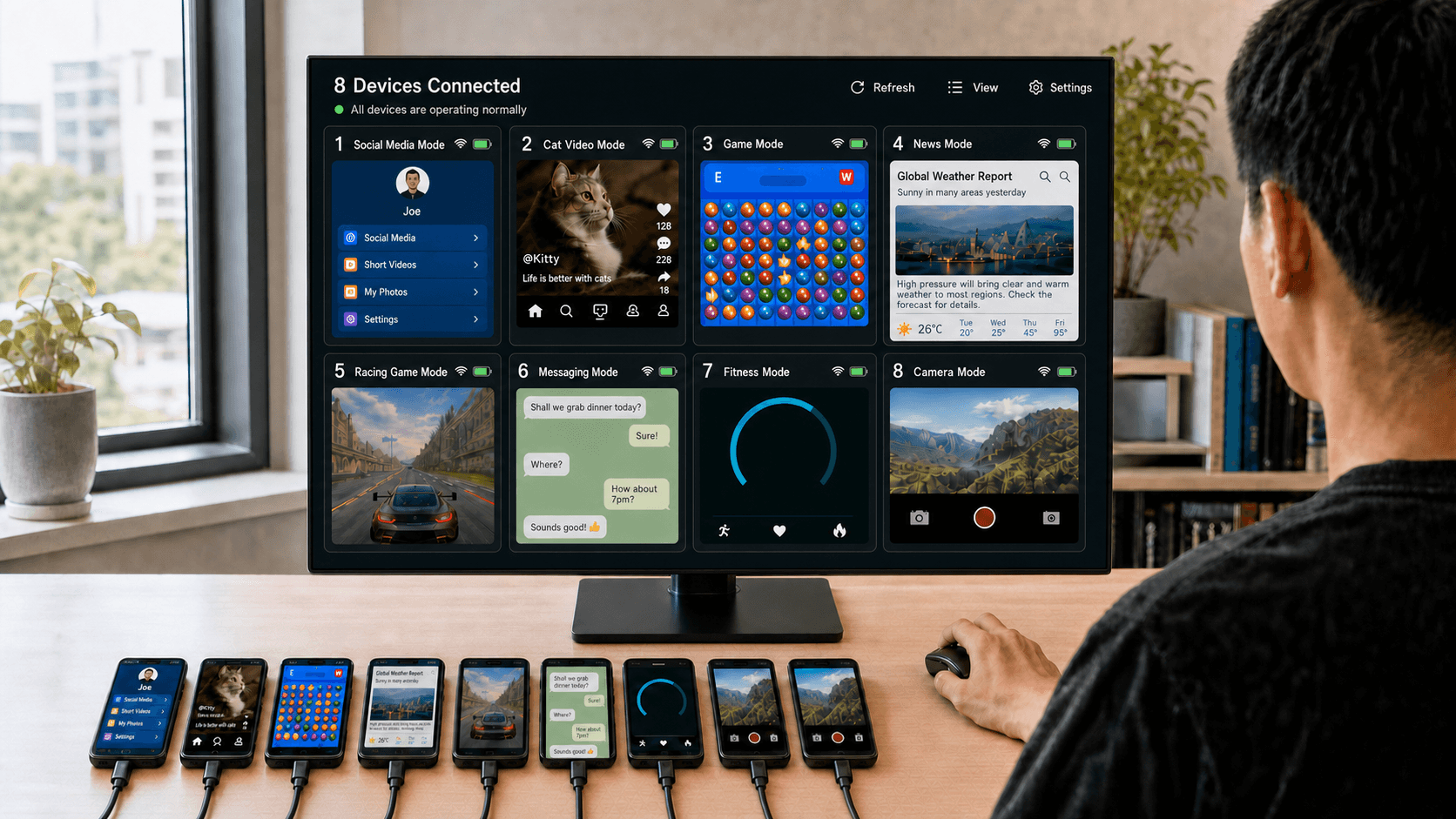
A purpose-built topology where Device A acts as the centralised intelligence layer, maintaining persistent connections and orchestrating all downstream endpoints.

easecity — stream.architecture.v1
DEVICE AControl Hubstream.ctrl.engineDevice 1Remote EndpointDevice 2Remote EndpointDevice 3Remote EndpointDevice NRemote EndpointMANAGEMENTControl InterfaceMONITORINGReal-time MetricsAPI GATEWAYREST / WebSocket
01

Single Control Plane

Device A maintains a persistent, authenticated session with every connected endpoint. All control logic is centralised — no peer-to-peer complexity.

02

Bi-directional Streams

Commands flow from Device A to remote endpoints. Status, telemetry, and stream data flows back. Full duplex, always synchronised.

03

Dynamic Endpoint Registry

Devices join and leave the network dynamically. The system reconciles topology changes without manual reconfiguration or downtime.

04

Unified Management API

Every operation is available via a clean API layer. Build custom dashboards, automate workflows, or integrate with existing tooling.

Use Cases

Built for Real Deployment Environments

From live production to enterprise infrastructure, our stream control platform operates where reliability and precision are non-negotiable.

Live Broadcast Operations

A single production hub controls multiple encoder stations, camera sources, and distribution endpoints simultaneously. Coordinate complex multi-source live events from one point of command.

Multi-sourceLive encodingDistribution

Enterprise AV Infrastructure

Centralise management of display systems, video distribution, and AV endpoints across large facilities. Automate scheduled events and monitor system health from a single interface.

AV managementSchedulingMulti-site

Surveillance & Monitoring Networks

Stream ingestion and forwarding from multiple remote camera nodes through a centralised relay. Reduce storage overhead, enable intelligent routing, and maintain persistent oversight.

Stream relayRemote nodesPersistent monitoring

Remote Device Fleet Management

Operate and maintain geographically distributed device fleets from a centralised control plane. Push configurations, monitor status, and issue commands without physical access.

Fleet opsRemote configStatus monitoring

Digital Signage Networks

Synchronise content across hundreds of display endpoints with frame-accurate control. Manage playlists, push updates, and monitor playback status across distributed installations.

Content syncMulti-displayRemote updates

Industrial Control Systems

Integrate with industrial devices and PLCs through a unified stream control layer. Standardise disparate hardware into a common management topology with full audit trails.

IndustrialProtocol bridgeAudit logging

Technical Process

From Connection to Orchestration

Every operation in our platform follows a deterministic, observable workflow — from initial device handshake to full stream orchestration.

01

Device Registration

Remote endpoints register with the control plane via a secure handshake. Each device receives a persistent session ID, capability manifest, and is indexed in the topology registry.

Technical Details

TLS mutual authentication
Session token issuance
Capability negotiation
Topology sync
02

Stream Channel Negotiation

Device A initiates stream channel establishment with each endpoint. Codec parameters, bitrate constraints, and relay paths are negotiated and confirmed before any data flows.

Technical Details

Channel capability exchange
Codec/format agreement
Relay path selection
Buffer configuration
03

Command Dispatch & Execution

Control commands from Device A are serialised, queued with priority ordering, and dispatched to target endpoints. Acknowledgements confirm execution; failures trigger automatic retry.

Technical Details

Priority command queue
Atomic dispatch
ACK/NACK handling
Retry with backoff
04

Stream Relay & Forwarding

Active streams from endpoints are received, validated, and relayed through the hub. The system handles packet loss compensation, jitter buffering, and format transcoding where required.

Technical Details

Jitter buffering
Packet loss compensation
Format transcoding
Adaptive bitrate
05

Health Monitoring & Recovery

Continuous health checks track connection quality, stream integrity, and endpoint responsiveness. Degraded connections trigger automatic recovery sequences without operator intervention.

Technical Details

Heartbeat monitoring
Stream health metrics
Auto-reconnect logic
Incident logging

What's Next

The Future of easecity Services

Our infrastructure is the foundation. These are the intelligent layers we're building on top of it.

Phase 02 — 2027

Online Services Platform

Cloud-native services extending easecity's control capabilities to web-scale environments. A developer portal, hosted management dashboards, and a service marketplace for third-party integrations.

  • Hosted control portal
  • Cloud deployment orchestration
  • Third-party integration marketplace
  • Managed relay infrastructure
  • Real-time analytics & reporting
Phase 03 — 2028

AI Intelligence Layer

The next evolution of stream control — where the system learns, adapts, and optimises itself. AI-driven routing decisions, predictive maintenance, natural language interfaces, and autonomous system management.

  • AI-powered stream routing
  • Predictive anomaly detection
  • Automated performance optimisation
  • Natural language control surface
  • Adaptive device behaviour modelling

Interested in early access to upcoming services?

Join the Early Access Programme

Register Interest